


A Practical Guide to Growing Longer Sweet Pea Stems
Every flower farmer dreams of harvesting those sprawling, 18-inch florist-grade sweet pea stems. However, a common frustration in the field is investing in premium seeds only to end up with short, stubby stalks as the season progresses.
While genetics matter—modern Spencer varieties are naturally predisposed to produce longer stems than older antique types—the variety is only a starting point. Even the best sweet pea will produce unmarketable stems if its growing conditions are not carefully managed.
If you want to maximize your stem length this season, here are the practical field strategies you need to apply:
1. Timing is Everything (Planting for Your Area)
The foundation of a long stem is built months before the flower actually opens. You absolutely must plant at the right time for your specific local climate.
The ultimate secret to long stems is getting the plants to establish a massive, deep root system in cool soil before the warm weather arrives. If the spring heat hits before the roots are deeply anchored, the plant will rush into blooming without the underground foundation needed to push out long stalks.
(Check your exact dates with our Zip Code Planting Calculator.)
2. Protect the Taproot with Rootrainers
Because deep roots are the key to long stems, how you start your seeds is critical.
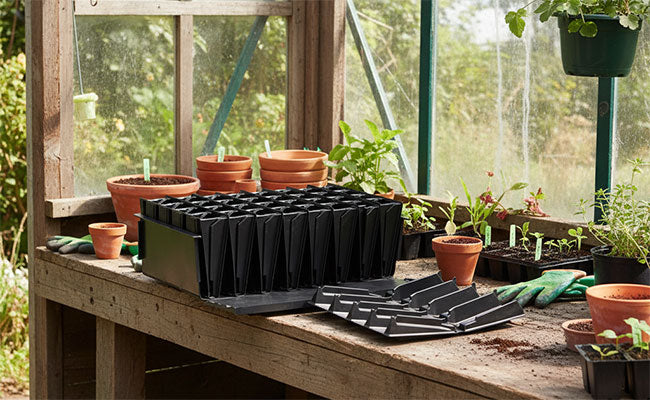
Sweet peas produce a long taproot very early in life and absolutely hate having their root systems disturbed. For this reason, traditional shallow seed flats should be avoided.
Instead, start your seeds in Rootrainers. These deep, ribbed cells guide the taproot straight down. When it is time to plant out in the field, the cells open up like a book, allowing you to slide the seedling into the earth with zero root disturbance.
(Find out more about Rootrainers.)
3. Trench Deeply
To encourage that taproot to keep driving downward, you need to prepare your field beds deeply. Many successful growers trench their rows two to two-and-a-half feet deep, burying a thick layer of well-rotted manure or rich compost at the very bottom.
By placing the richest nutrients deep underground, you draw the roots far down into the earth, creating a highly resilient plant.
4. Never Let the Vines Harden
Stem length is incredibly sensitive to moisture. If your beds dry out between waterings, the plant will immediately begin to ration its sap.
This lack of moisture causes the cellular tissue of the vines to prematurely harden and turn woody. Once a sweet pea vine hardens, the physical elongation of future flower stalks is permanently restricted, and the plant will only throw short stems.
Maintain a consistent watering schedule—preferably with drip irrigation—to keep the plant tissue soft, pliable, and capable of stretching.
5. Block the Wind
Constant buffeting from cold spring winds causes mechanical stress to the vines.
In response, the plant thickens and toughens its stems to withstand the elements, which directly inhibits the soft, rapid elongation necessary for long flower stalks.
By erecting a simple windbreak—such as a wall of burlap or mesh netting on the windward side of your rows—you can engineer a calmer, warmer microclimate that encourages the vines to push out much longer stems.
6. Harvest Deeply
How you cut your flowers dictates how the plant will continue to grow. Snipping just the top of the flower stalk leaves the old plant structure intact, leading to progressively shorter stems on the next flush of blooms.
Instead, make your harvest cuts deep into the vine canopy. Removing a larger portion of the stem forces the plant to push out vigorous new side branches from the base, which will yield significantly longer stems on your next harvest.
7. The Cordon System (For Premium Markets)
If you are growing for high-end wedding florists or exhibitions and need the absolute longest, straightest stems possible, you will need to utilize the Cordon system.
This method involves restricting the plant to just one or two main vines. Every lateral side shoot and curling tendril is meticulously pinched out as soon as it forms.
By preventing the plant from wasting any energy on excess foliage, 100% of its power is channeled into the main leader, resulting in exceptionally long, thick flower stalks.
The Flower Farmer's Checklist for Long Stems
- [ ] Plant at the Right Time: Use your local frost dates to ensure plants establish roots in cool weather before the summer heat arrives.
- [ ] Use Rootrainers: Start seeds in deep cells that open like a book to prevent taproot disturbance during transplanting.
- [ ] Trench Deeply: Cultivate beds at least two feet deep, burying your compost at the base to draw roots downward.
- [ ] Install Windbreaks: Erect burlap or netting on the windward side of the rows to prevent wind stress and tissue hardening.
- [ ] Maintain Consistent Moisture: Never allow the beds to dry out. Even moisture keeps the plant tissue soft and capable of stretching.
- [ ] Harvest Deeply: Cut far down into the vine canopy to stimulate vigorous basal branching for the next flush of flowers.
- [ ] Try Cordon Training (Optional): For premium length, restrict plants to 1 or 2 main leaders and routinely pinch out all lateral shoots and tendrils.
4 comments
Thankyou for the great information on growing sweetpeas. Now I better understand previous years when my flowers have not done as well.
Patti
Thank you for the clear growing advice. I’ve had amazing success getting long stems by. growing cordon on strings. Lots of extra work policing tendrils and shoots, but worth it. I am especially grateful for the ‘protect from wind’ tip; I was planning to grow in a bigger bed this Autumn; now I won’t, so I have a better chance of repeating my beginner’s luck in the less windy location! Thank you!
Sharon
Thank you for the very helpful “longer stem” info. Very enlightening!
Which Spencers do you recommend for the absolute longest stems? (or other types).
I want to plant (this fall) sweet peas with the very longest stem potentially
I have 2 large pots (for my sweet peas) that measure 15” across, 18” high.
This seems ideal for deep roots.
How many seeds do you recommend per pot?
I think the pots were a bit too crowded this year.
Also is bone meal good for longer stems?
Thank you
dale race
Thank you for all of the sweet pea tips.
Much appreciated!
Bertha Denzer
Leave a comment
This site is protected by hCaptcha and the hCaptcha Privacy Policy and Terms of Service apply.