


Article: Do Sweet Peas Self-Seed? The Surprising Truth About Volunteer Vines

Do Sweet Peas Self-Seed? The Surprising Truth About Volunteer Vines
If you have ever grown a beautiful arch of sweet peas, you know that they are true annuals. They grow vigorously, bloom profusely, and then die back completely at the end of the season. But many gardeners eventually ask: If I leave the pods on the vines, will my sweet peas self-seed and come back next year?
The short answer is yes, sweet peas are highly effective at self-seeding. However, whether you actually want them to do this in your garden is a different matter entirely! Here is a look at the fascinating biology behind how sweet peas reproduce, and what it means for your flower beds.
How Nature Does It
To understand sweet pea reproduction, we have to look at their native habitat in Sicily. In the wild, self-seeding is the plant's only method of survival. The wild sweet pea flowers for a brief month in the spring, after which it produces pods that eventually dry out and spread their seeds onto the ground. These seeds lie dormant through the hot, dry summer and naturally germinate as soon as the autumn rains arrive, growing steadily until they bud and bloom again the following year.
Will They Come Back "True to Color"?
One of the biggest worries gardeners have about self-seeding plants is whether the offspring will look anything like the parent, or if cross-pollination will result in muddy, unpredictable colors.
Fortunately, the sweet pea is naturally self-pollinating. In fact, fertilization takes place completely hidden inside the closed bud before the flower even opens. Because the keel of the flower protects the reproductive organs from bees and other insects, the risk of cross-pollination is incredibly low. This means that if a sweet pea drops its seeds in your garden, the "volunteer" seedlings (sometimes referred to by professional growers as "ground keepers") will almost always grow true to type.
The Survival of the Fittest Seeds (And The Hungriest Pests)
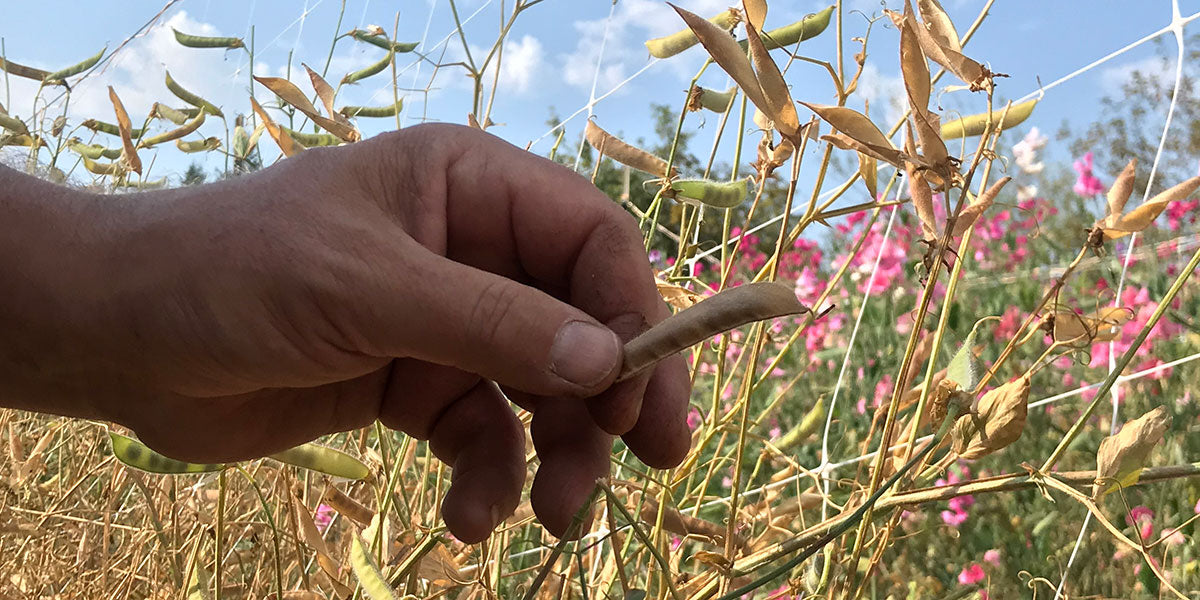
If you leave the pods on the vine until they turn brown and papery, they will eventually burst open, shooting seeds into your garden beds.
While many of these seeds will naturally sprout the following autumn or spring, some may take much longer. Sweet pea seeds come in different colors and textures, and the dark, slaty-black seeds have notoriously hard, moisture-resistant coats. These hard-coated seeds have been known to lie dormant in the open soil for several years before finally germinating and surprising the gardener!
However, there is no guarantee that these fallen seeds will survive to sprout. Sweet pea seeds are a favorite food for many garden pests, particularly mice and birds. Mice are notorious for digging up and eating seeds while they are germinating or lying in the soil. Because the seeds are such a highly prized food source, your plants may only gently reseed, or you may not see any volunteer plants emerge at all if pests discover and eat the dropped crop before spring arrives.
The Catch: Why You Shouldn't Let Them Self-Seed
While having free plants pop up every year sounds wonderful, letting your sweet peas self-seed comes with a massive drawback: it will completely ruin your current flower harvest.
Sweet peas are biologically driven to reproduce, and they will set seeds the moment your back is turned. The catch is that as soon as the plant successfully forms seed pods, it considers its life's mission complete and will stop producing new flowers. All of the plant's energy is immediately redirected away from creating beautiful blossoms and into maturing those podded offspring.
The Takeaway
If your primary goal is to enjoy a long, abundant season of fragrant cut flowers, you must pick the blooms continually and never allow the plant to set seed.
However, if you reach the very end of the summer and are ready to let the vines fade, you can certainly leave the final flush of flowers on the stems to develop into mature, brown seed pods. Whether you collect them manually to store in the freezer for next year, or let nature take its course and scatter them on the soil—hoping the mice don't find them first—you will be guaranteed a new generation of beautiful sweet peas!
Leave a comment
This site is protected by hCaptcha and the hCaptcha Privacy Policy and Terms of Service apply.