


Decoding Sweet Pea Fragrance: The 'High Scent' Standard
The signature perfume of the sweet pea (Lathyrus odoratus) is its most legendary trait, capable of evoking deep nostalgia for sun-drenched summer gardens. For many years, the world of sweet pea breeding was divided between the intensely fragrant, small-flowered Grandifloras and the large, ruffled Spencers that often sacrificed scent for exhibition-style beauty. However, one specific variety, ‘High Scent,’ changed the landscape by becoming the definitive global benchmark against which all other sweet pea aromas are now measured.
The Gold Standard: ‘High Scent’
Developed by the world-renowned breeder Dr. Keith Hammett in New Zealand and introduced around 2002, ‘High Scent’ (also known in some regions as ‘April in Paris’) is recognized globally as the world benchmark for scent. It was specifically bred to restore the complex essential oils of ancestral heirloom varieties while maintaining the robust growth habits and longer stems favored by modern gardeners.
Visually, this variety is as elegant as it is fragrant, producing cream-colored blossoms with a delicate violet picotee edge. As the flower ages, this violet coloration gradually seeps further into the petals, creating a beautiful depth of color. While technically classified as a Modern Grandiflora or Semi-Grandiflora, it combines the best traits of both historical classes: the intoxicating, spicy odor of the antiques and the improved stem quality of modern hybrids.
The Science Behind the Benchmark
Scientific analysis helps explain why ‘High Scent’ is such a powerhouse in the garden. While the original wild sweet peas contain a complex profile of 18 distinct fragrance ingredients, many modern Spencer varieties have lost more than half of these compounds, sometimes retaining as few as seven. Varieties like ‘High Scent’ are prized because they maintain a higher concentration of these aromatic components—such as linalool and phenylacetaldehyde—creating a redolent bouquet of sweet frangipani, orange blossom, and fresh citrus.
Researchers have also identified exactly where this scent originates. It is produced almost exclusively within the standard and wing petals, with very little contributed by the keel.
Understanding Fragrance Perception
Not everyone has the same sense of smell. Some people are naturally more receptive to fragrance than others, and your ability to detect scent is also influenced by what you have been smelling beforehand.
Perfumers often refer to a phenomenon called nasal fatigue, which occurs after smelling several fragrances in succession. After sampling around three distinct scents, the nose can become temporarily saturated, dramatically reducing your ability to distinguish subtle fragrance differences.
This is particularly noticeable when comparing sweet pea varieties. After smelling several blooms in a row, the fragrances can begin to blend together—or even disappear entirely. If you are trying to properly assess the scent of sweet peas, it is best to pause after sampling a few flowers to allow your sense of smell time to reset and refresh.
It is also important to remember that sweet pea fragrance naturally fluctuates throughout the day. Temperature, rainfall, humidity, sunlight, and even the age of the bloom all influence how strongly the flowers release their essential oils.
Maximizing Fragrance Intensity
Even a variety that serves as the benchmark for scent depends on environmental factors to reach its full potential. The release of essential oils is a physiological process that is highly sensitive to its surroundings.
- Warmth and Sunlight: Fragrance is significantly more intense on warm, sunny days, as the essential oils require heat to be released effectively.
- Weather Sensitivity: In dull or wet weather, even the most fragrant varieties will have a noticeably diminished aroma.
- Maturity of Blooms: The most powerful fragrance is always found in freshly opened, young flowers.
How Long Will Sweet Peas Remain Fragrant in the Vase?
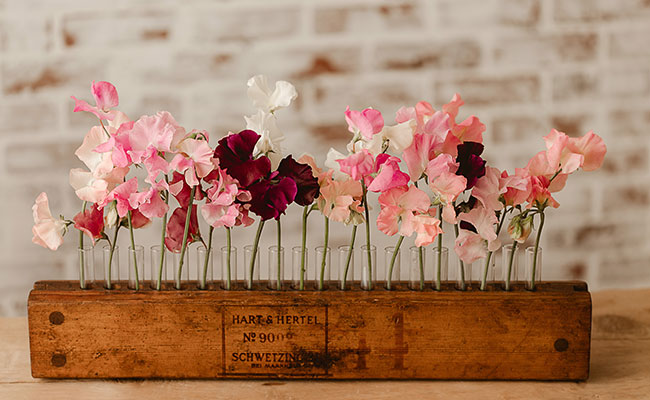
Freshly cut sweet peas will usually retain their fragrance for approximately three days in the vase. While the blooms themselves may last closer to five days depending on conditions, the powerful perfume tends to fade significantly after the third day.
For the strongest scent indoors, regularly replace older stems with newly cut flowers from the garden. This ensures your arrangements remain both visually beautiful and richly fragrant.
Managing Scent Indoors
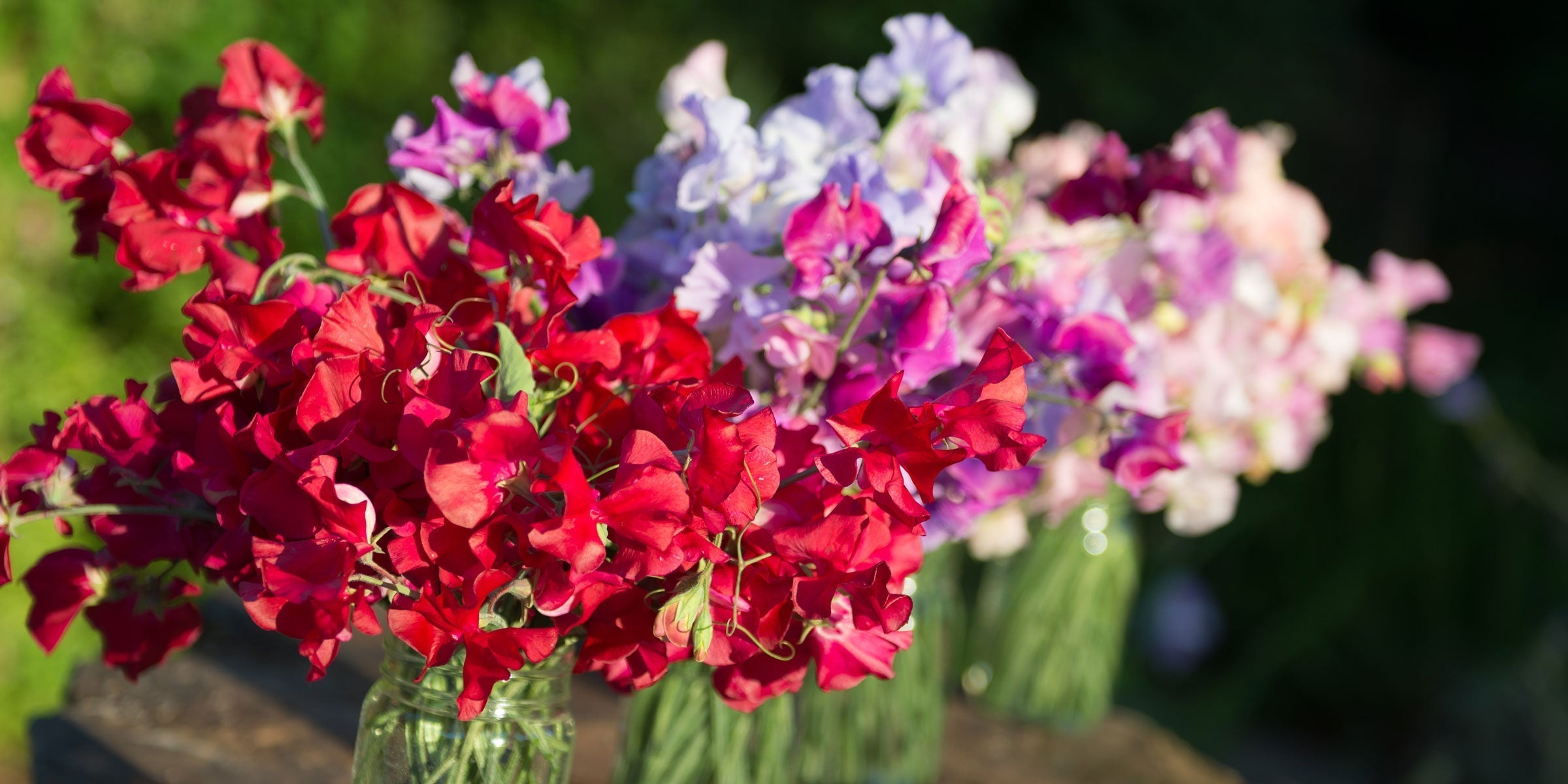
While having a garden filled with the ‘High Scent’ standard is a delight, growers are often cautioned that its perfume can be exceptionally powerful. In confined indoor spaces, the intense scent of a large arrangement can become overwhelming. For this reason, many floral designers prefer to mix benchmark varieties with other garden companions to create a more balanced sensory experience in the home.
By selecting varieties that meet this high standard of perfume, gardeners can ensure their sweet peas provide an authentic sensory experience that honors the legendary history of the "Queen of Annuals".
Leave a comment
This site is protected by hCaptcha and the hCaptcha Privacy Policy and Terms of Service apply.