





How Long Do Sweet Peas Take to Bloom?
If you are eager to fill your home with fragrant, ruffled bouquets, you are likely asking: how long do sweet peas take to bloom? The journey of sweet peas from seed to flower is an incredibly rewarding process that requires a bit of patience. Generally, you can expect your sweet peas to bloom approximately 12 to 20 weeks after germination.
While some early-maturing cultivars can technically produce blossoms in as little as 75 to 90 days, your exact sweet pea flowering time will fluctuate significantly depending on your specific sowing date, local climate, and general cultivation practices. Understanding the various sweet pea growth stages will help you gauge whether your vines are on track for a spectacular summer display.
Sweet Pea Growth Timeline
While local weather patterns will always dictate the exact pace of your garden, the typical sweet pea growth timeline follows this general progression:
| Growth Stage | Approximate Timeframe | Key Milestones & Care |
|---|---|---|
| Germination | 14 to 21 Days | Seeds sprout when kept at 55–65°F (13–18°C). Pre-soaking seeds for 24 hours in room temperature water can help speed up this process. (For a deeper dive, check out our [Sweet Pea Seed Germination Guide]) |
| Seedling Stage & Pinching | Weeks 3 to 6 | Sweet pea seedlings develop their first true leaves. When the young plants reach 4 to 8 inches tall, you must pinch out the central growing tip to encourage stronger, thicker side shoots. (See [What Do Sweet Pea Seedlings Look Like?]) |
| Transplanting & Climbing | Weeks 4 to 10 | If started indoors, seedlings are generally transplanted outside 4 to 5 weeks after sowing. Once established on their supports, the vines will rocket upwards, sometimes putting on twelve inches of vertical growth each week. |
| Budding & First Blooms | 75 to 90+ Days (Weeks 11–15) | The plants reach maturity and begin producing their first flowers. While fast-growing varieties can bloom in 75 days, many standard crops require 12 to 16 weeks of steady growth before flowering. |
| Continuous Harvesting | Week 12 and Beyond | The long-awaited sweet pea bloom time arrives. To keep the vines productive, you must harvest the flowers frequently; if the plant is allowed to form seed pods, it will permanently stop flowering. |
Why Some Sweet Peas Bloom Earlier Than Others
When determining how long sweet peas take to flower, several environmental and genetic factors come into play:
- Sowing Season: Planting sweet peas in the autumn allows them to establish massive root networks over the winter. As a result, these robust vines usually spring into action and bloom weeks earlier than those sown in the spring.
- Day Length: The amount of available daylight strictly dictates when do sweet peas flower. Winter-flowering strains require only 10 hours of daylight to trigger blooms, Spring strains need 11 hours, and the highly popular Summer "Spencer" varieties demand 12 to 15 hours of daylight before they will start producing flowers.
- Temperature: Sweet peas thrive in cool conditions. While gentle spring warmth encourages healthy development, sudden or excessive heat will artificially accelerate the sweet pea growth timeline, forcing the plants to flower prematurely on short stems and rapidly go to seed.
- Variety Differences: Your choice of seed heavily impacts your schedule. Early-flowering varieties have been specifically bred to bloom ahead of the standard summer types, making them an excellent choice for regions that suffer from intense summer heat.
- Growing Conditions: Sweet peas cultivated in deeply dug, richly manured soil have the stamina to grow larger and bloom more abundantly than those forced to survive in shallow, compacted ground.
Signs Flowering Is Getting Close
If you are participating in a [Sweet Pea Grow Along] and eagerly awaiting your first bouquets, watch your vines for these visual cues that flowering is imminent:
- Vigorous climbing: The plants will suddenly surge upwards, rapidly ascending their trellises.
- Tendrils attaching: The modified leaflets (tendrils) will actively reach out and tightly grasp their supports.
- Thick stems: The main stalks will become noticeably thicker and more robust.
- Side shoots: Multiple strong lateral branches will push up from the base of the plant.
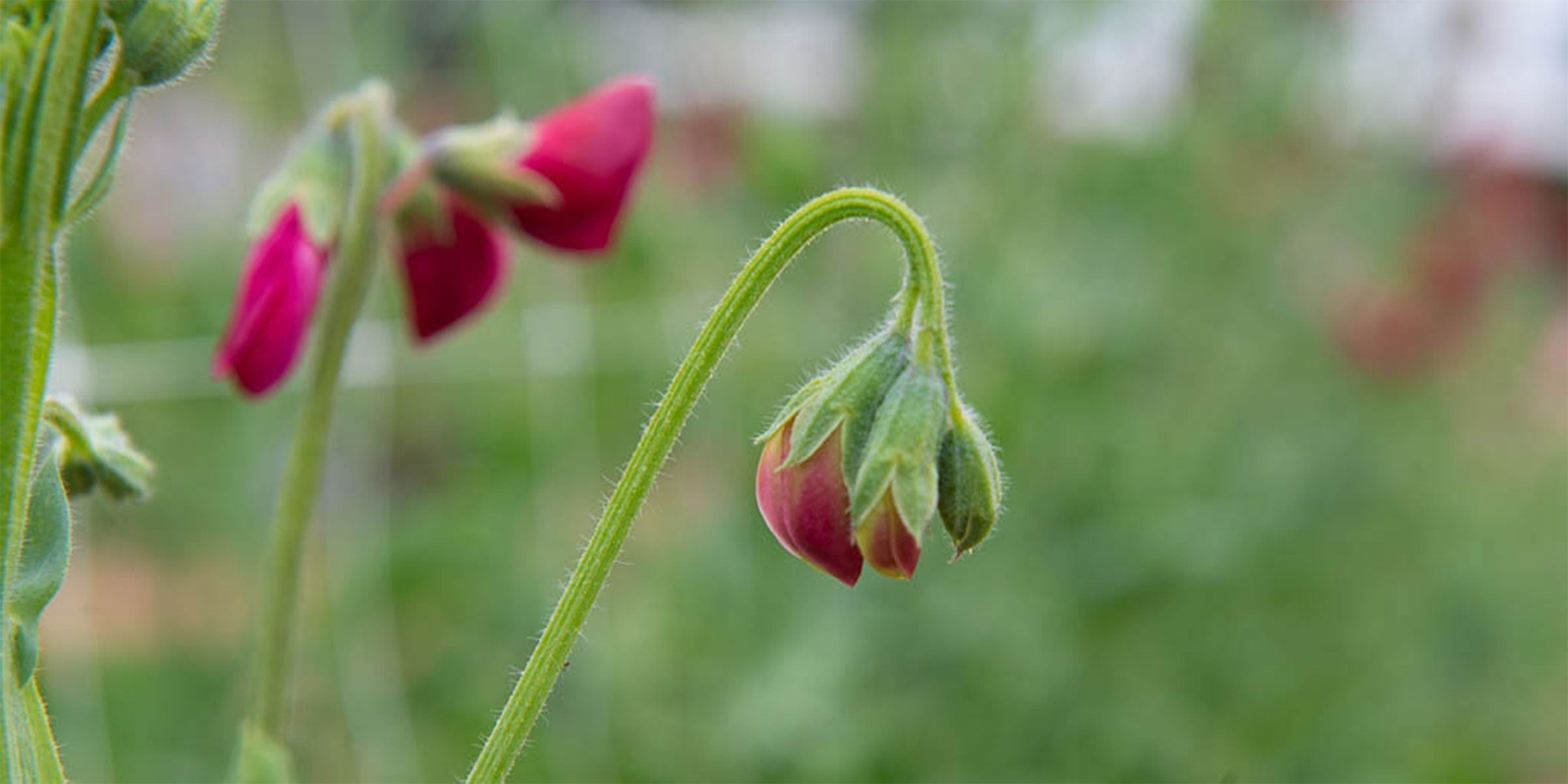
- Visible flower buds: You will spot small, tightly closed buds developing at the junctions where the leaves meet the main stems.
What If My Sweet Peas Are Not Flowering?
If months have passed and you are still waiting for blooms, do not panic. Address these common troubleshooting concerns:
- Too much nitrogen: While sweet peas love rich soil, overfeeding them with heavy nitrogen fertilizers or excessively fresh manure will result in massive amounts of sappy, green foliage at the total expense of flowers.
- Weather fluctuations: Prolonged periods of dull, cloudy weather, excessive moisture, or sudden drops in temperature can cause the vines to abort their developing blossoms—a highly frustrating phenomenon known as bud drop.
- Overcrowding: Sowing seeds too thickly forces the plants to compete for light and nutrients. Vines should be spaced roughly 6 to 8 inches apart; planting them closer actually decreases overall flower production.
- Poor support: Vines left to tangle on the ground will struggle to thrive. (Learn how to train them upward with our [Guide to Using Obelisks for Sweet Peas]).
- Young plants: If you sowed your seeds late in the spring, your sweet peas from seed to flower journey simply requires more time. The roots must fully establish before the plant can support blooms. (If you had trouble getting your seedlings started, review [Why Sweet Pea Seeds Aren't Germinating]).
Sweet Pea Gardens Experience
Here at Sweet Pea Gardens, our routine relies on working with the natural rhythm of our climate. We typically sow our seeds in deep pots in the greenhouse during January. After diligently tending the young plants through the seedling stage, we plant out the hardy vines into the garden in early spring. By giving them this protected head start, we are consistently rewarded with a breathtaking abundance of exhibition-quality flowers in late June and early July.
Frequently Asked Questions
How long do sweet peas take to bloom from seed?
Depending on the specific variety and your growing environment, you can expect blooms approximately 12 to 20 weeks (roughly 75 to 100+ days) after the seeds germinate.
When do sweet peas flower?
While the exact month varies by your local climate, traditional summer-flowering sweet peas require 12 to 15 hours of daylight, meaning they typically put on their best display in late spring and early summer.
Do autumn-sown sweet peas flower earlier?
Yes. Seeds sown in the autumn develop extensive root systems over the winter, resulting in hardier plants that leap into action and bloom weeks earlier than their spring-sown counterparts.
Why are my sweet peas growing but not flowering?
If your vines are producing lots of lush, green leaves but no buds, you may have applied too much nitrogen fertilizer, they may be suffering from a lack of direct sunlight, or the days are simply not yet long enough to trigger their reproductive cycle. Another common problem is sowing seeds too late - vines will grow but they will produce few, if any, flowers.
How can I encourage more flowers?
The absolute best way to stimulate sweet pea flowering is to harvest the blooms relentlessly. If you allow the flowers to fade and form seed pods on the vine, the plant will consider its reproductive cycle complete and will permanently stop blooming.

Leave a comment
This site is protected by hCaptcha and the hCaptcha Privacy Policy and Terms of Service apply.