Quick Facts
- Botanical Name: Lathyrus odoratus
- Classification: Spencer
- Petal Pattern: Solid/Flush
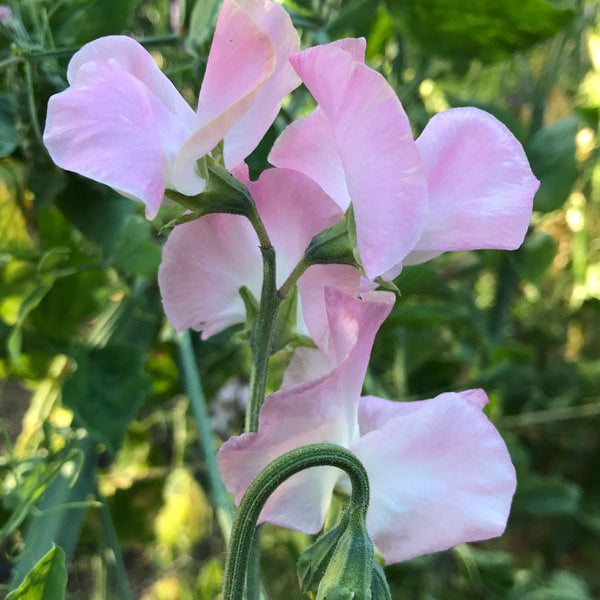
- Color Profile: Pale pink on a white ground
- Fragrance: Moderately Scented
- Breeder: Unwins
- Year Introduced: 2006
- Flowering Type: Summer
Overview
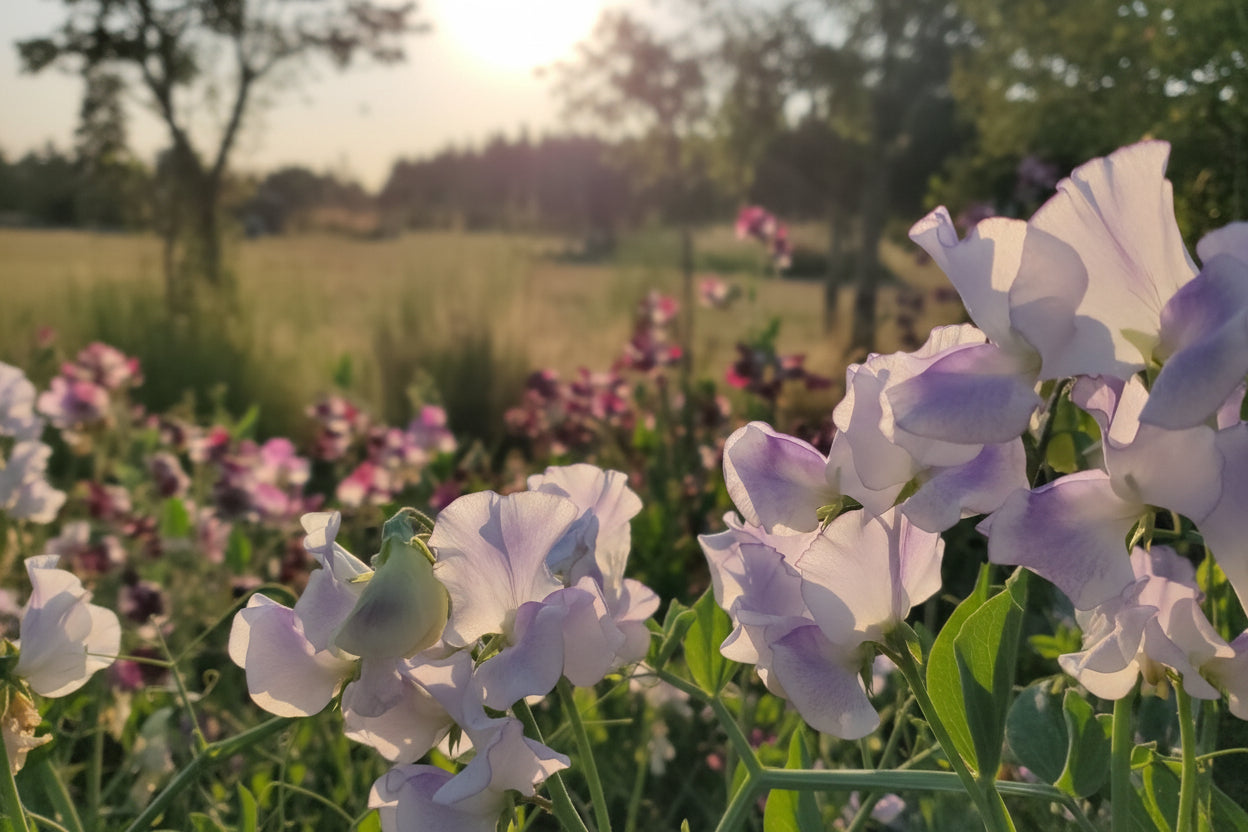
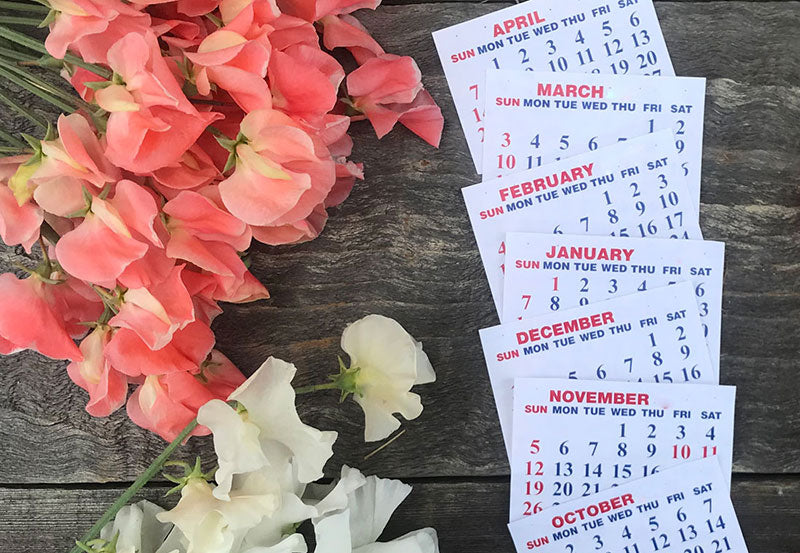
'Pink Pearl' is an exceptionally delicate and romantic summer-flowering Spencer sweet pea. As its name suggests, it features soft, luminous pale pink tones over a crisp white ground, giving the petals a beautiful pearlescent quality. It is an essential variety for growers looking for soft pastel colors for bouquets and garden displays.
Growth Habit
Like most traditional Spencers, this variety is a tall, vigorous climbing vine that requires sturdy vertical support to thrive. It produces large, ruffled blooms characteristic of the Spencer classification, held on stems long enough for excellent cutting.
Cultivation Notes
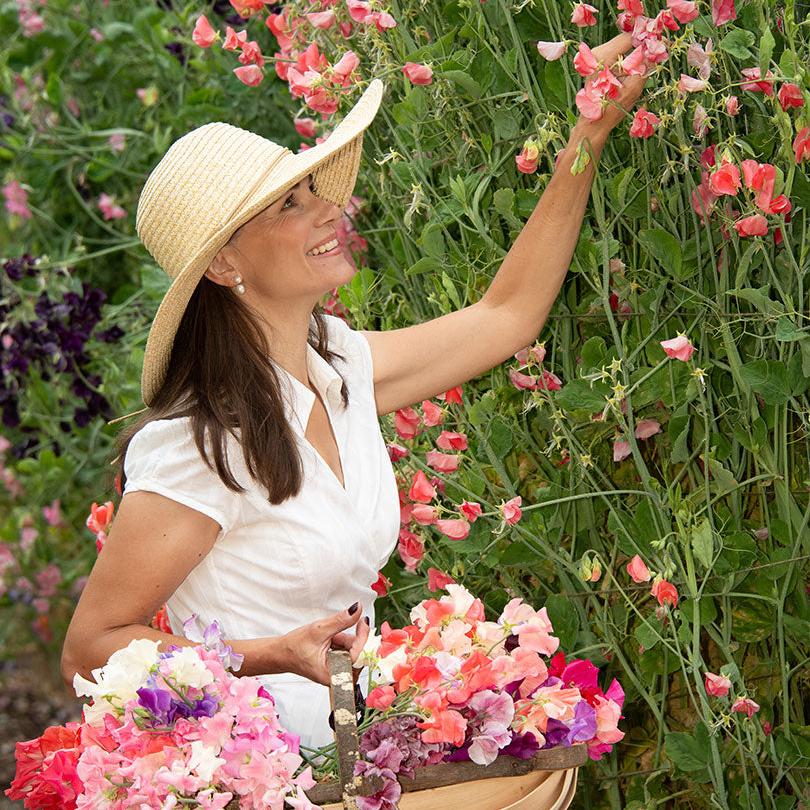
Because 'Pink Pearl' is a standard summer-flowering variety, it is a "long-day" plant that requires at least 12 hours of daylight to successfully initiate blooming. To maximize its potential, provide it with rich, deeply prepared soil. Like all Spencers, it will require regular harvesting and deadheading to prevent it from setting seed pods, which would halt its flower production.
Historical Notes
This specific modern Spencer variety was bred by the renowned British sweet pea firm Unwins and introduced in 2006. Interestingly, the name 'Pink Pearl' has a rich and repetitive history in the sweet pea world! It has been used to name several distinct varieties over the decades, including:
- A rich pink Semi-grandiflora bred by Unwins/Sharpe in 1905.
- A pearl pink Spencer bred by Dobbie & Co in 1920.
- An apricot pink Spencer bred by Everitt in 1957.
- A spring-flowering dwarf variety introduced by Burpee in 1966.
In the Garden
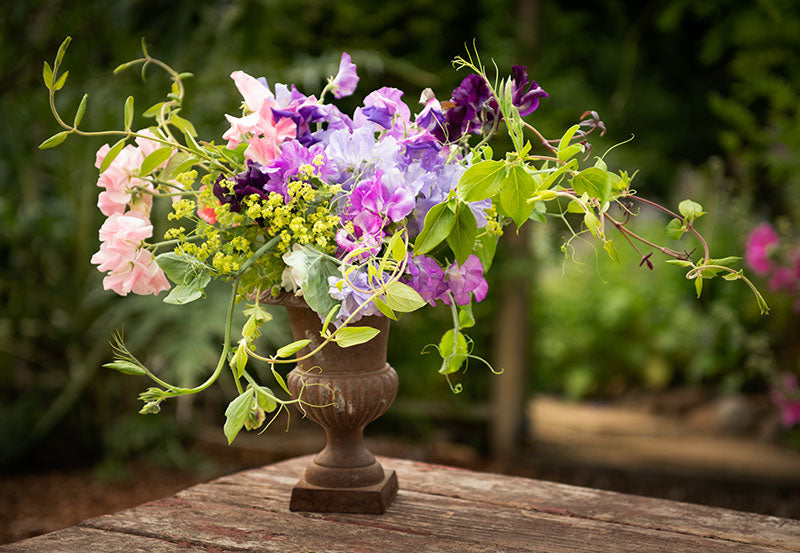
Grown for: Soft, pearlescent cut flowers, adding delicate romantic tones to the garden, and providing essential light pastels for floral arrangements.
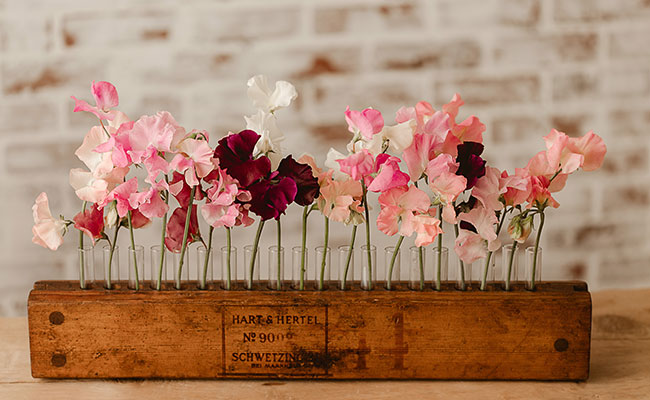
Companion Planting: Pair this soft pale pink with deep, dramatic maroons like 'Almost Black' or 'Windsor' for striking high-contrast arrangements, or blend it with other soft pastels like 'Jilly' (cream) and 'Gwendoline' (magenta-pink) for a harmonious, classic sweet pea bouquet.