Quick Facts
- Botanical Name: Lathyrus odoratus
- Classification: Grandiflora
- Petal Pattern: Streaked / Flake
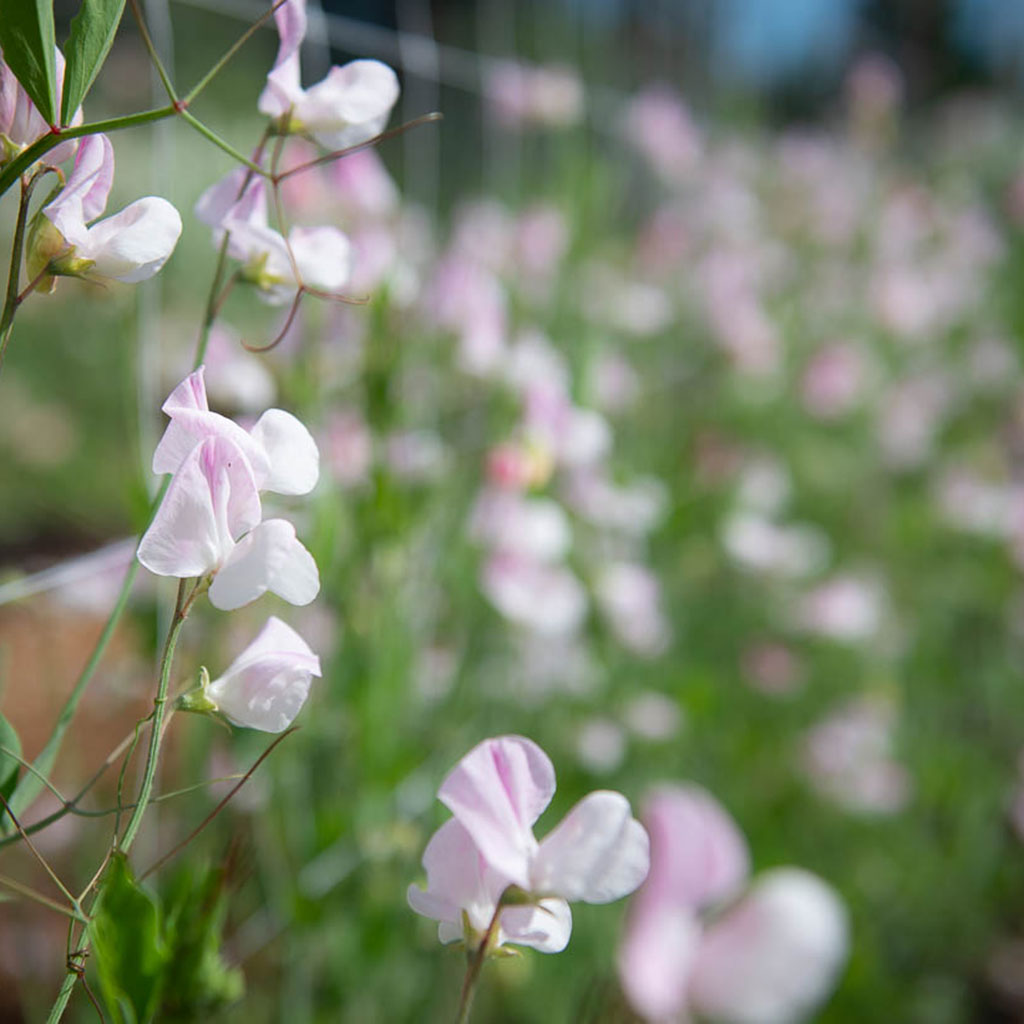
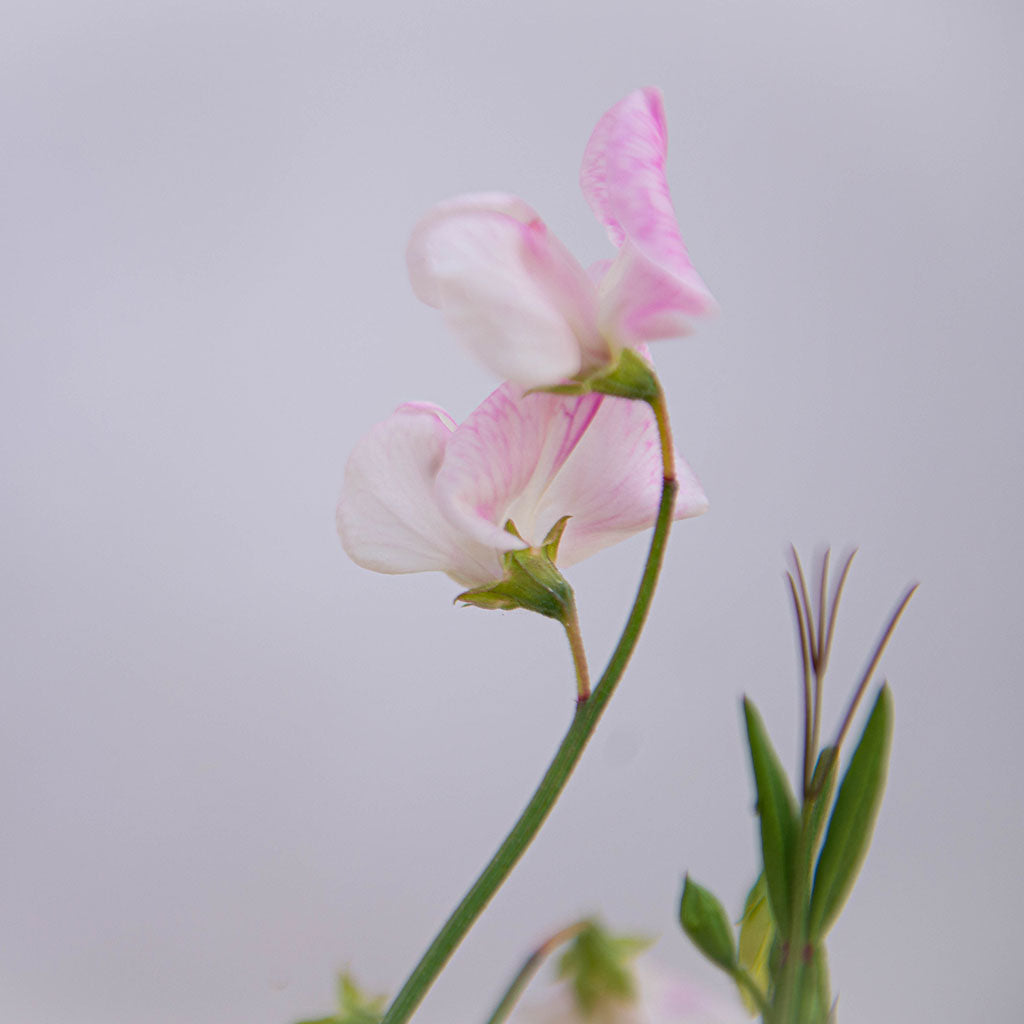
- Color Profile: A very pale pink foundation delicately streaked with darker pink
- Fragrance: Highly Scented (Boasts an intense and exceptionally distinctive aromatic profile)
- Breeder: Dr. Keith Hammett
- Year Introduced: 2017
- Flowering Type: Early / Spring-flowering (Initiates blooms with only 10 to 11 hours of daylight)
Overview
'Enigma' is an extraordinary early-season sweet pea that captivates growers with both its visual charm and its powerful, one-of-a-kind perfume. The medium-sized blossoms feature a very pale pink background adorned with delicate, dark pink streaking. Because it initiates flowering with just 10 to 11 hours of daylight—compared to the standard 12 hours required by typical summer Spencer and Grandiflora types—it is an outstanding choice for autumn sowing. This early-blooming trait allows growers, particularly those in warmer areas like many Australian regions, to enjoy an extended, abundant cutting season long before the intense summer heat arrives.
Growth Habit
As a vigorous climbing vine, 'Enigma' requires a reliable, tall support structure such as a trellis, netting, or a bamboo teepee. Securing the plants to a strong vertical framework encourages healthy upright stretch and helps support the generous flush of fragrant blossoms.
Cultivation Notes
For the best results, especially in areas with mild winters or hot summers, sow seeds in the autumn to maximize the early-flowering window. Start them in deep modular trays to encourage a strong, downward-reaching taproot. Once transplanted into deeply prepared, well-nourished soil, pinch out the central growing tip on young seedlings to promote vigorous lateral branching. Harvesting the flowers frequently is essential to maintain continuous blooming; if seed pods are allowed to form, the plant will prematurely stop producing new flowers.
Historical Notes
Bred by the celebrated New Zealand sweet pea specialist Dr. Keith Hammett, this striking Lathyrus odoratus cultivar carries a name that playfully nods to the lingering mystery surrounding its complex lineage and unusual breeding behavior. It was officially introduced to the botanical records in 2017.
In the Garden
Grown for: Providing an early, extended harvest of exceptionally fragrant, streaked cut flowers, and offering growers in hot climates a longer season before summer temperatures spike.
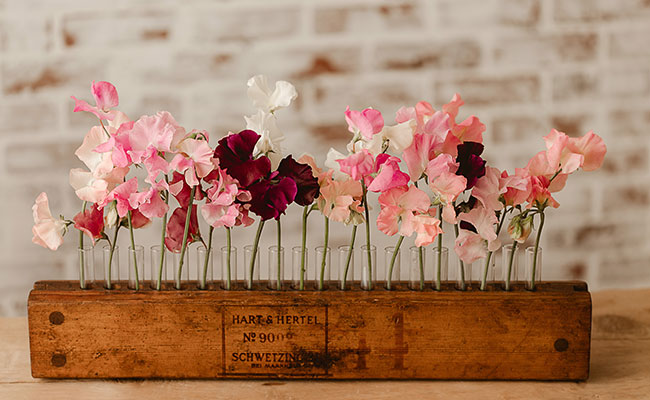
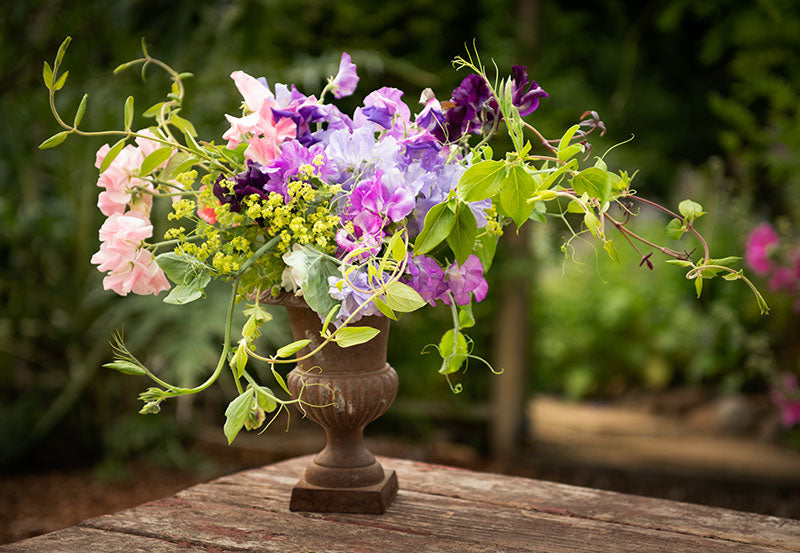
Companion Planting: The pale and dark pink streaking pairs beautifully with solid white or warm cream early-flowering varieties (like 'Bix') for a soft spring bouquet, or it can be arranged with deeper, solid pinks to draw out the delicate streaks in its petals.