


Skip to content

Cart

Your cart is empty

Sweet Pea 'Blue Vein'


At a Glance

Spencer HybridSummer Flowering (Long Day)Color-Shifting (Orange to Blue)Moderate Scent

Sweet Pea ‘Blue Vein’

Quick Facts

  • Botanical Name: Lathyrus x hammettii (Modern Shifter) / Lathyrus odoratus (Historical)
  • Classification: Spencer / Color-Shifter
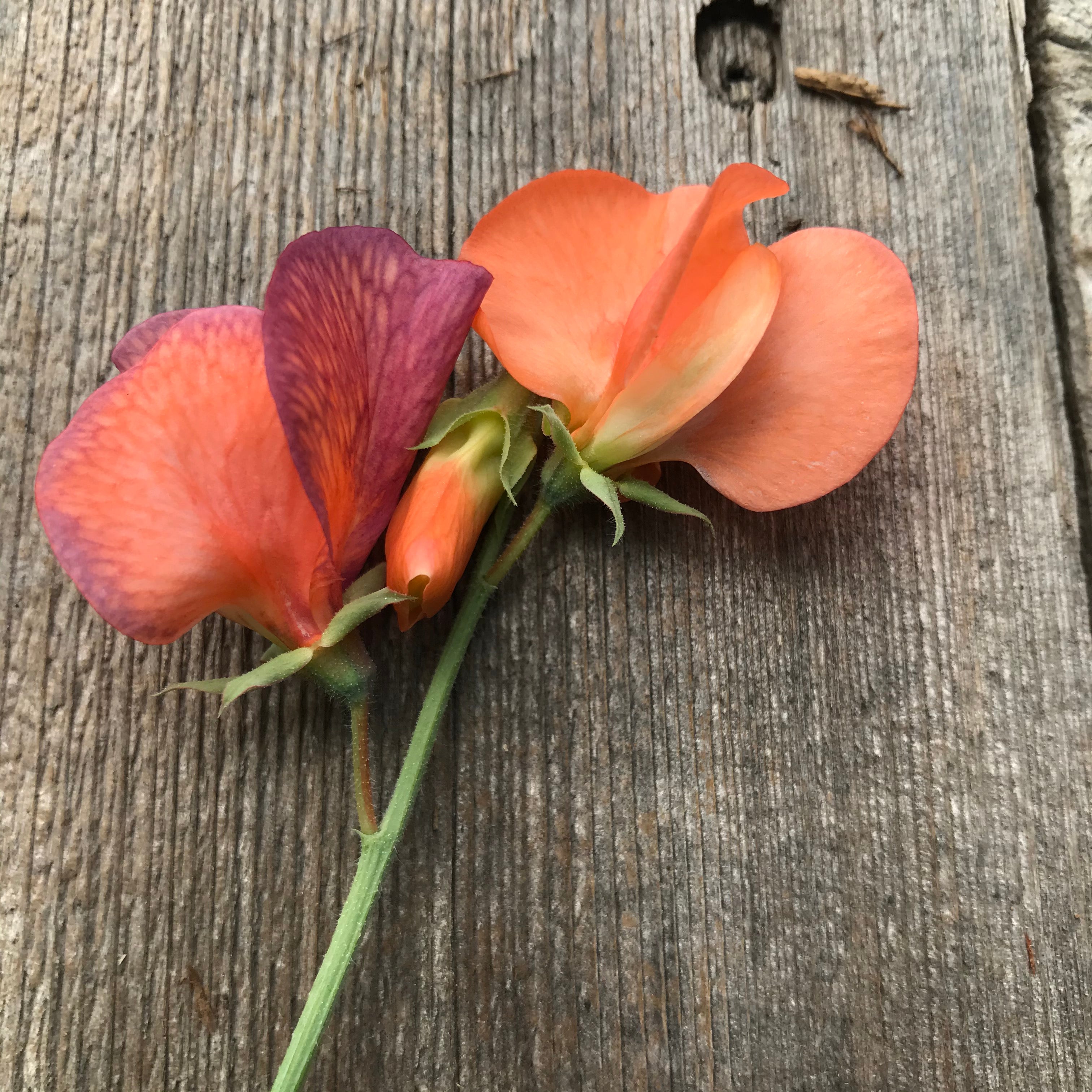
  • Petal Pattern: Solid opening that develops contrasting veins
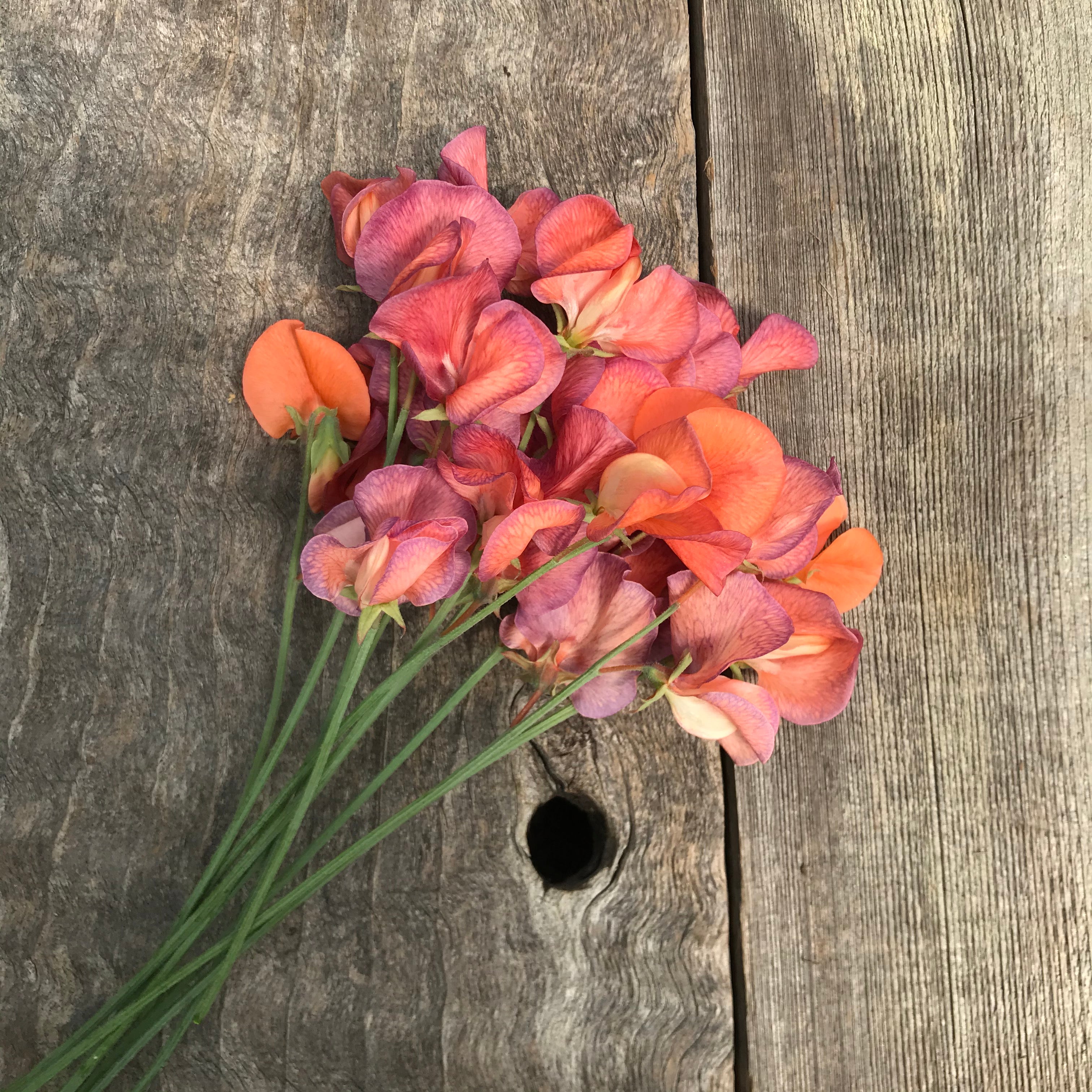
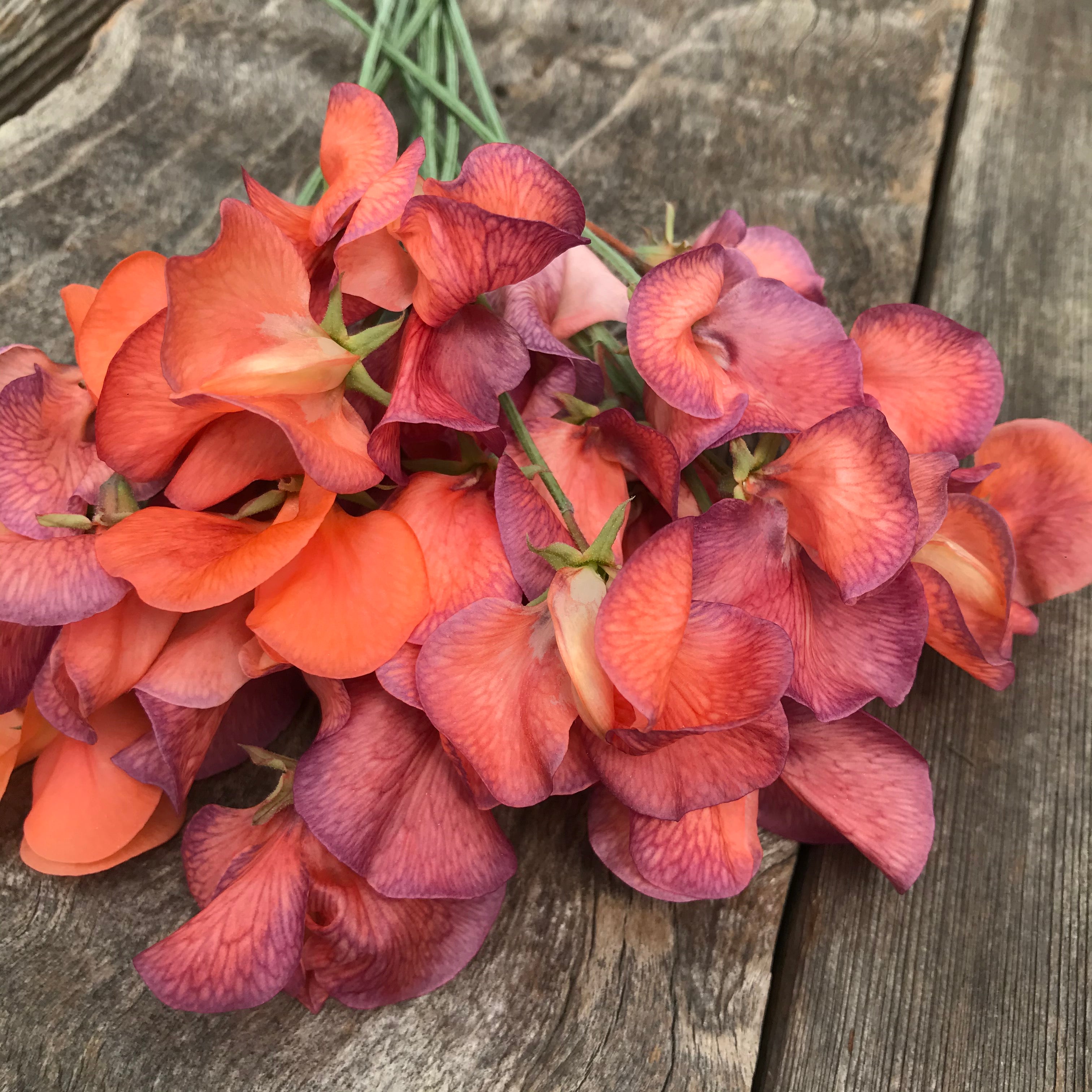
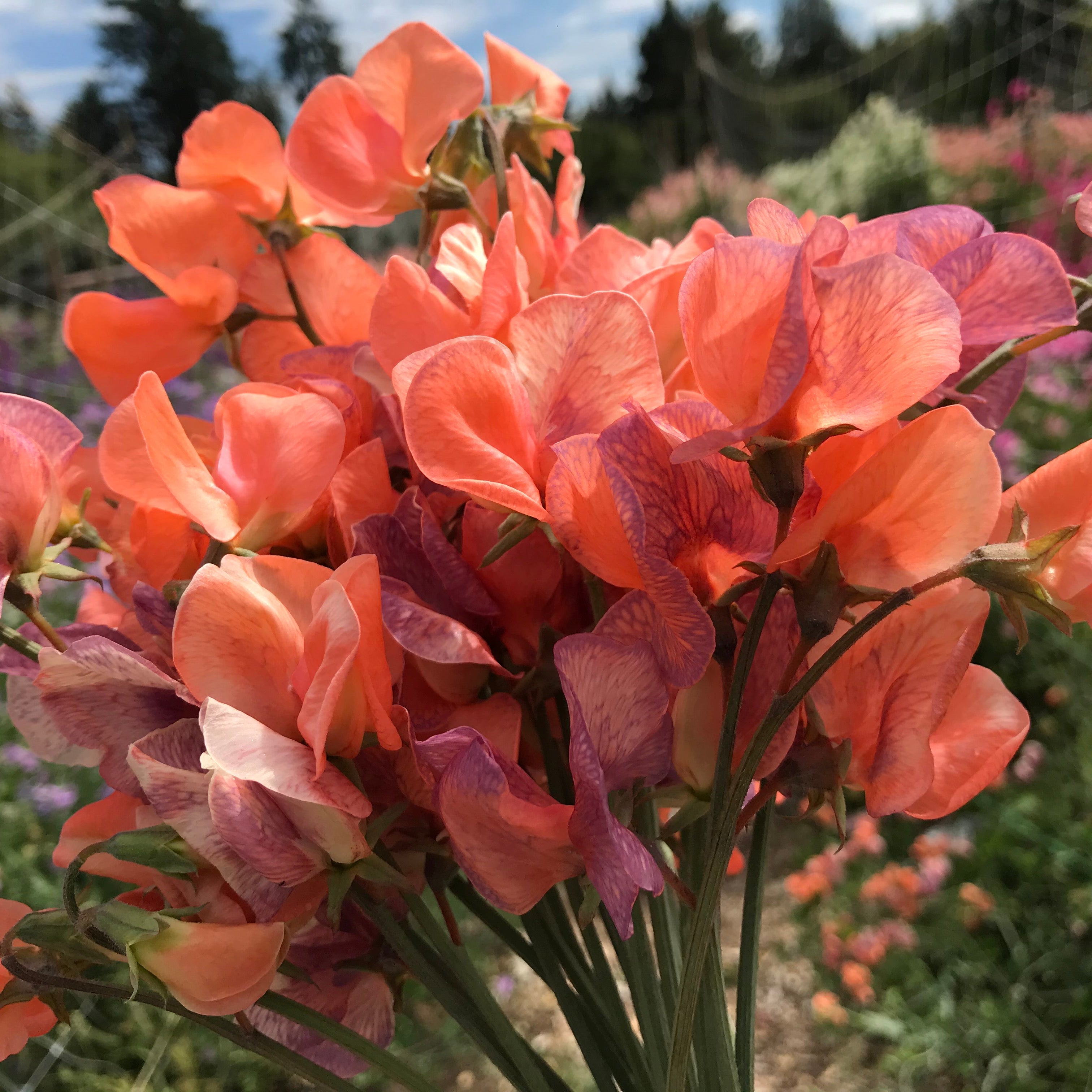
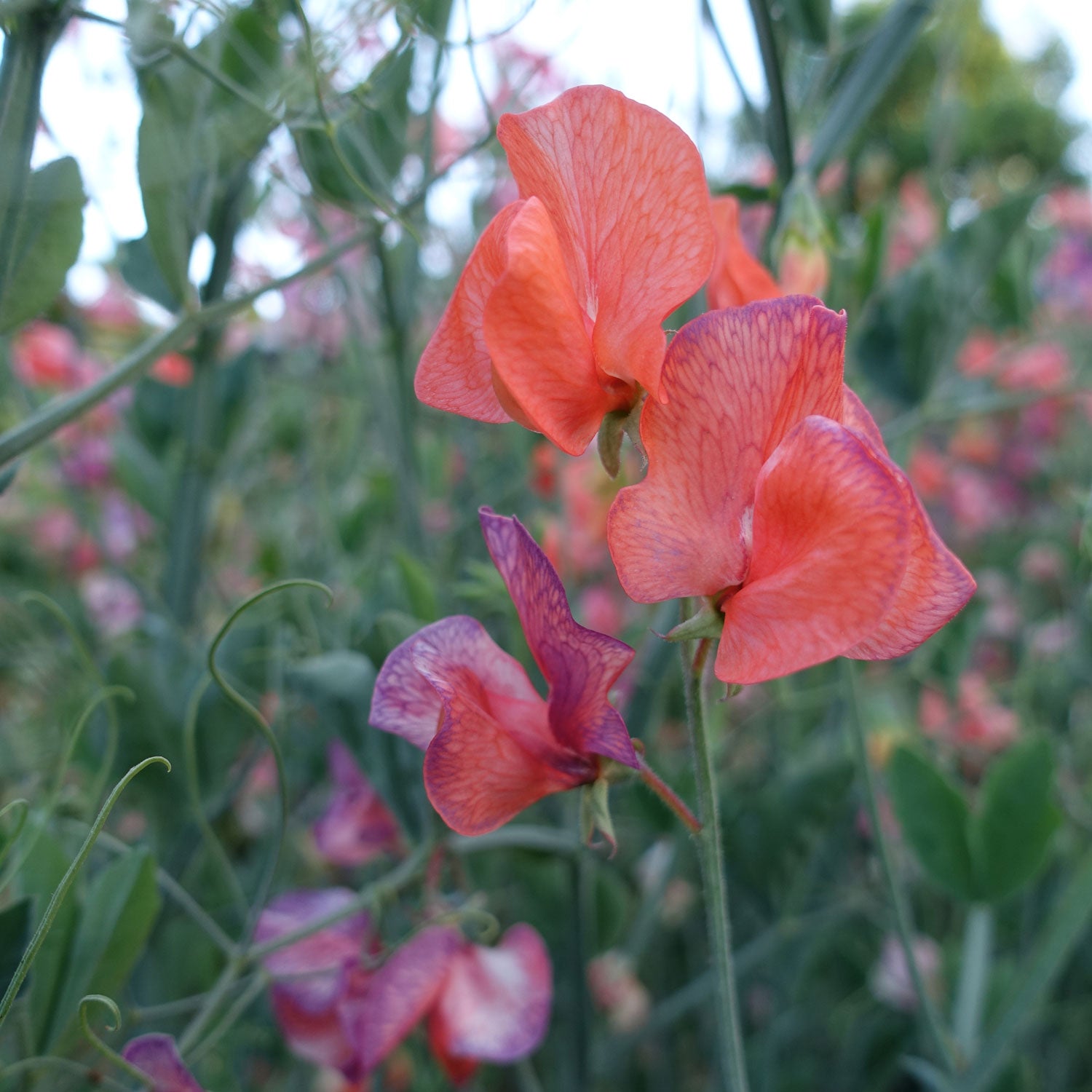
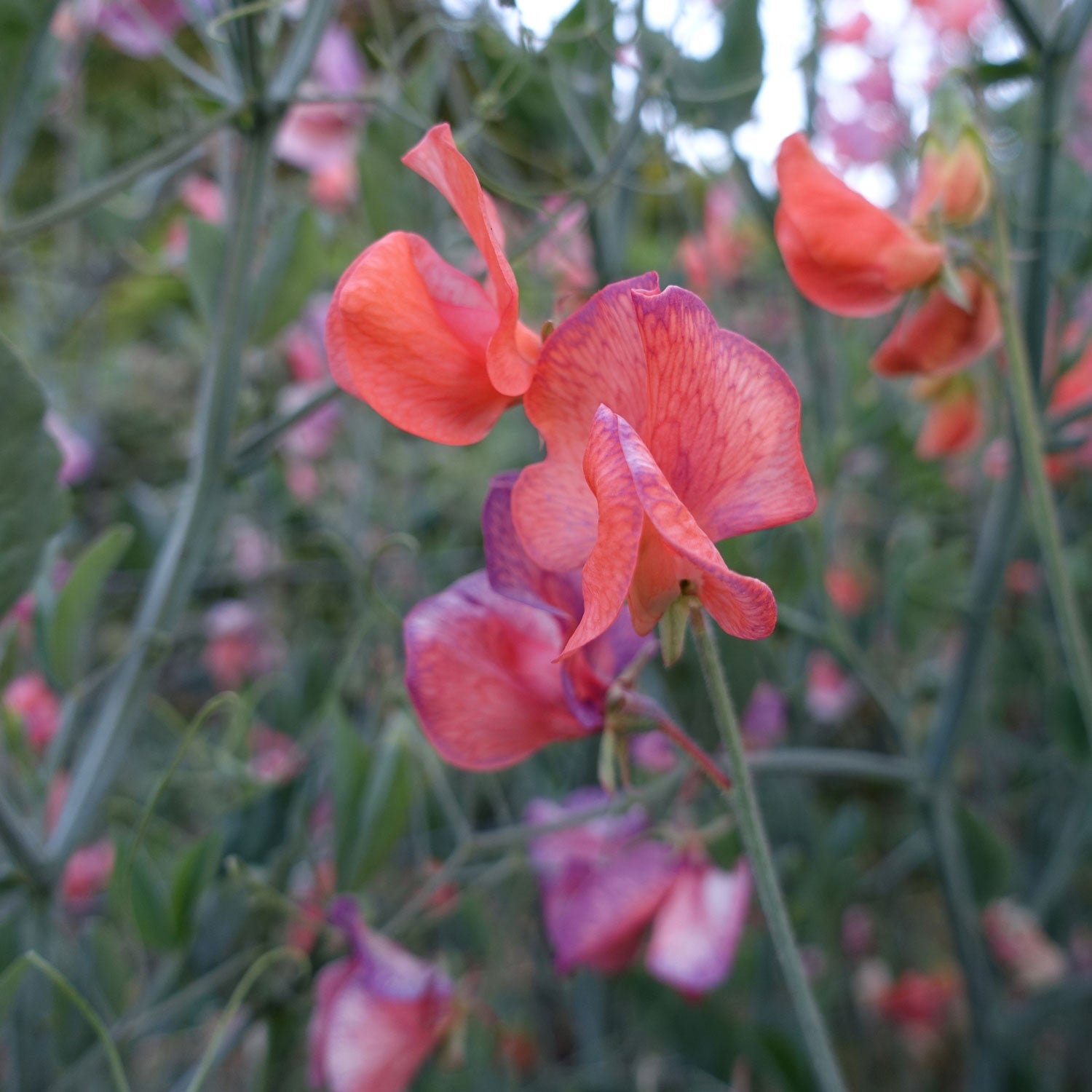
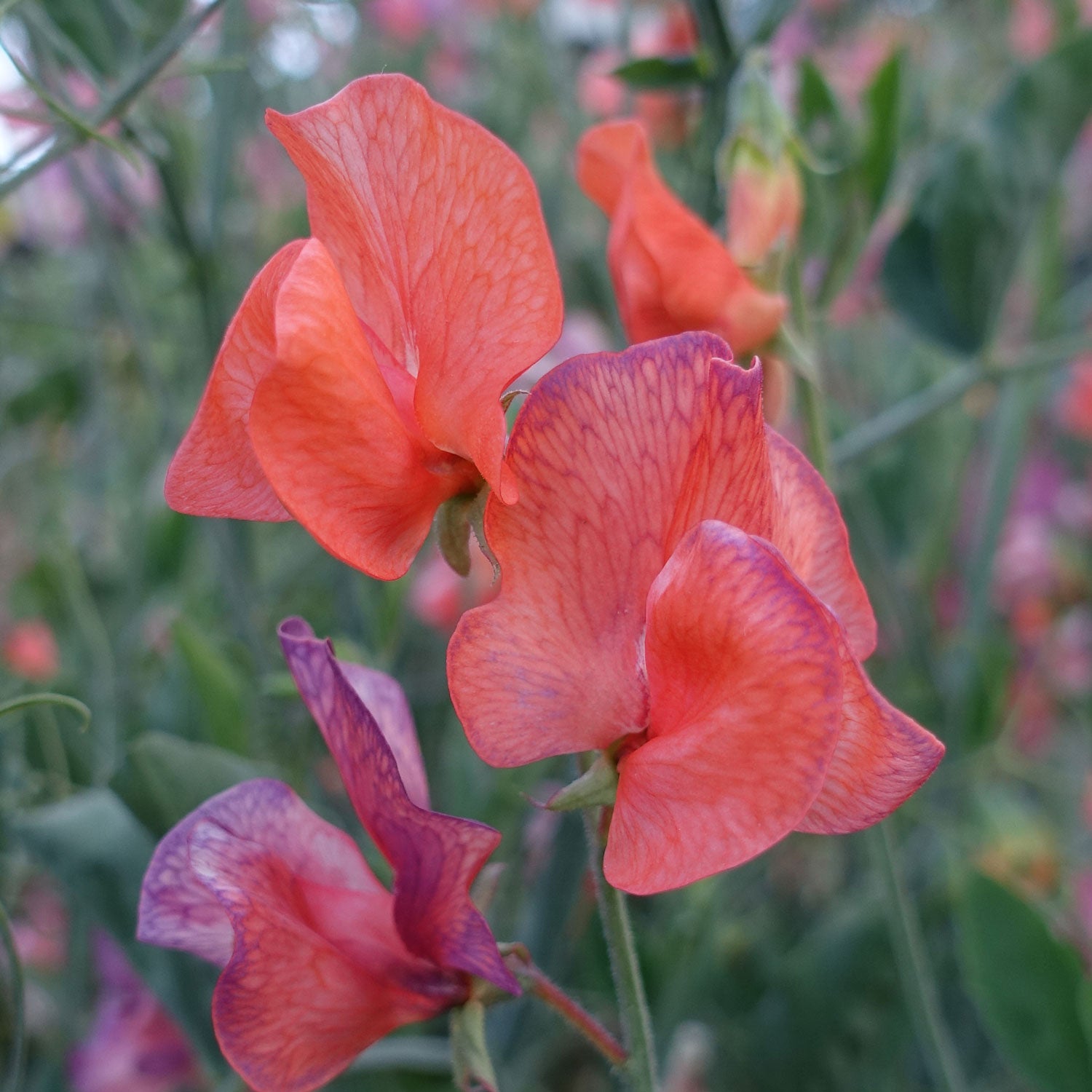
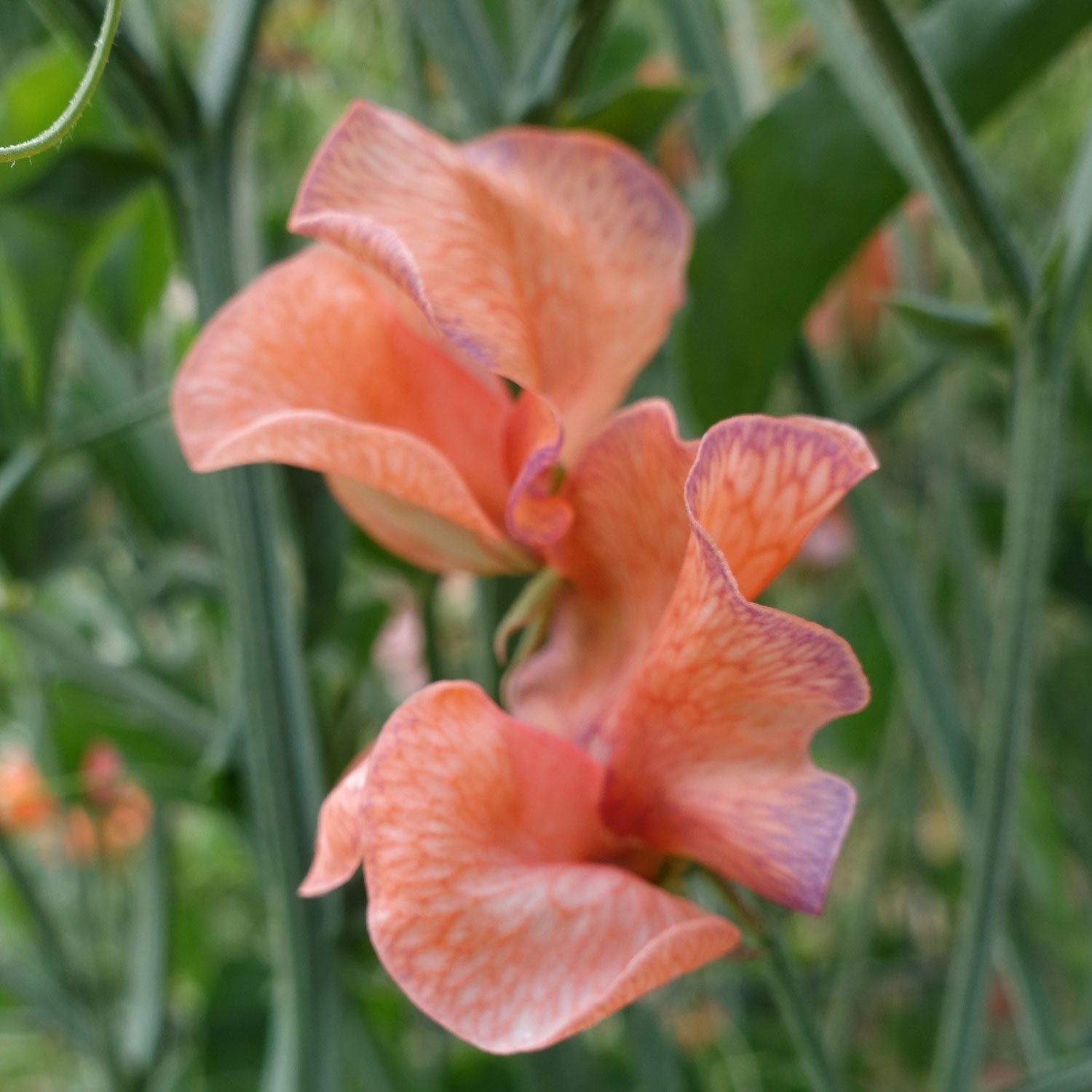
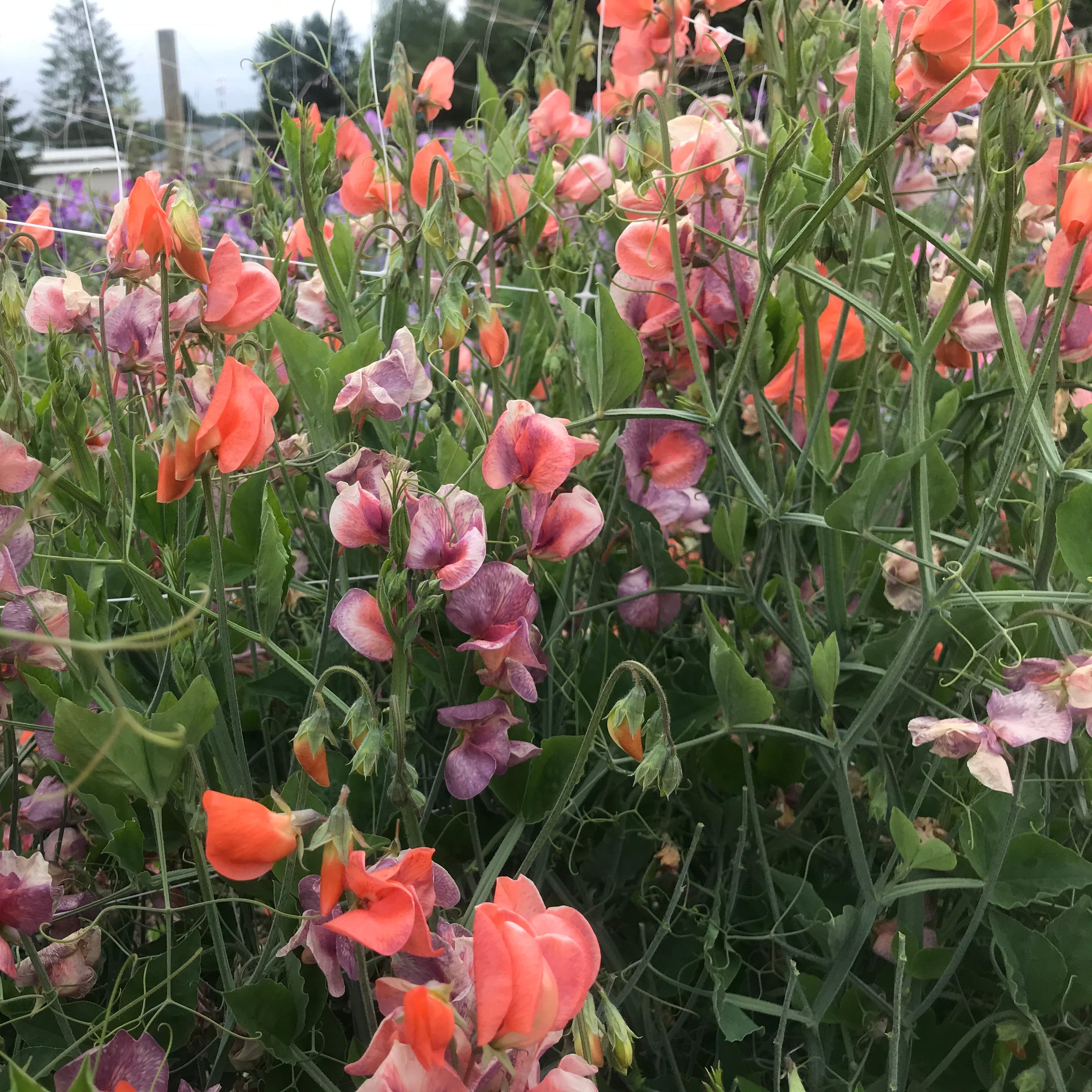
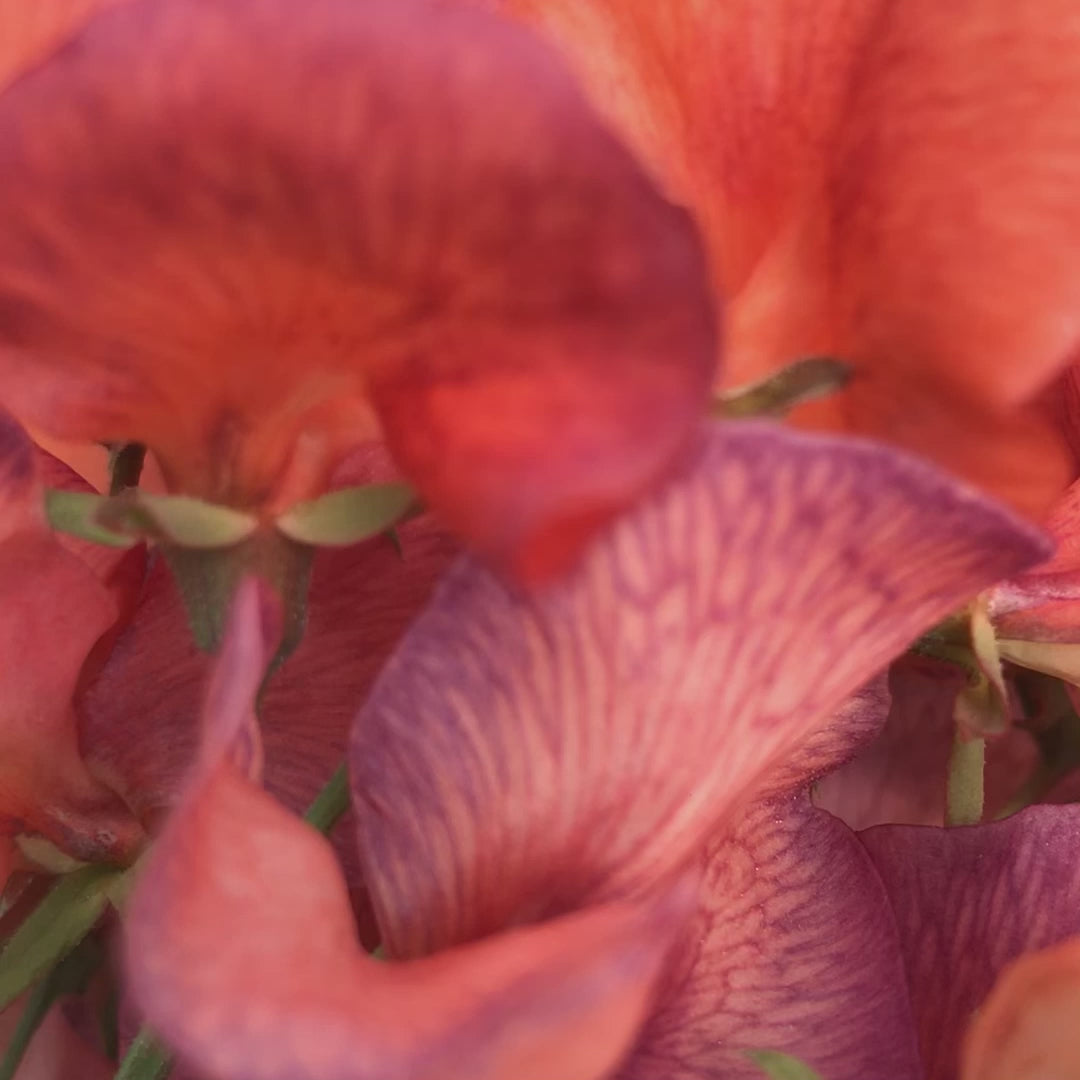
  • Color Profile: Opens in warm orange or marbled apricot and matures to display striking blue veins
  • Fragrance: Pleasant
  • Breeder: Dr. Keith Hammett (Modern Shifter) / Carters (Historical namesake)
  • Year Introduced: 2008 (Hammett) / 1965 (Carters)
  • Flowering Type: Summer-flowering (Long-day)

Overview

Today, the name 'Blue Vein' is most famous for identifying one of the most remarkable introductions from New Zealand's legendary plant breeder, Dr. Keith Hammett. Belonging to his innovative "shifter" class, this flower performs a captivating botanical trick: rather than simply fading as it ages, the blossom actively transforms. The large, beautifully ruffled petals open in warm shades of orange and marbled apricot, and gradually develop highly distinct blue veins as they mature. This dynamic, morphing coloration makes it an incredibly coveted, statement-making choice for floral designers and home gardeners alike.

Growth Habit

Botanically categorized under the new Lathyrus x hammettii group, this energetic vine exhibits a tall, highly vigorous climbing nature that will produce rampant growth throughout the season. It is prized for generating generously sized, Spencer-type blossoms on long, sturdy stalks that are ideal for cutting. Because it falls into the summer-blooming category, it relies heavily on the prolonged daylight hours of the season—requiring at least twelve hours of sun—to successfully trigger its prolific flowering phase.

Cultivation Notes

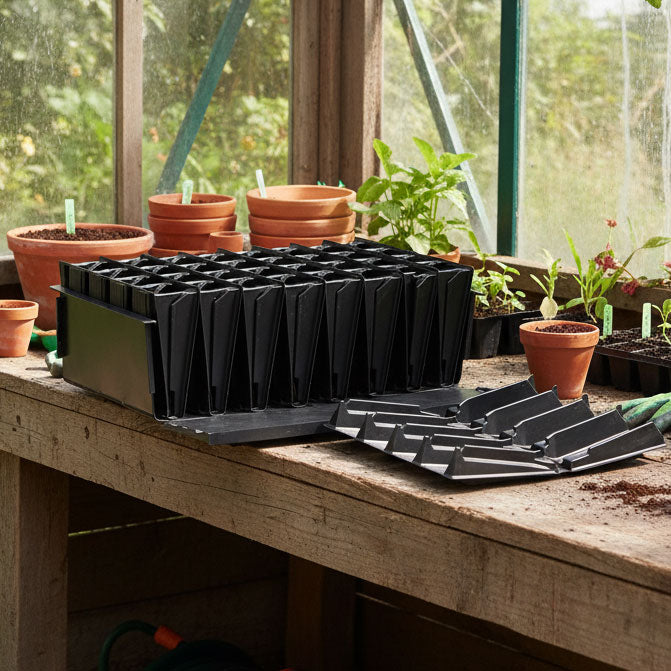
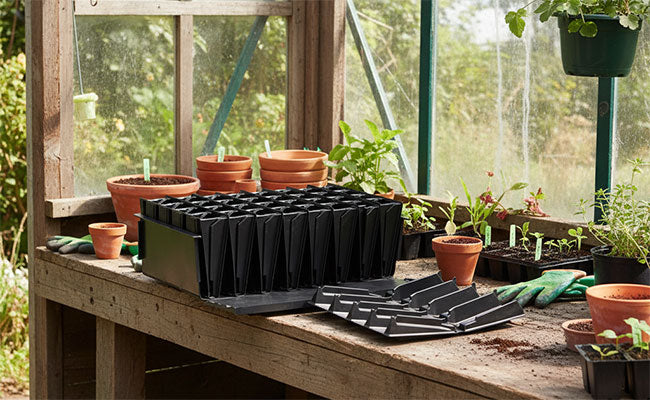
To guarantee the strongest and deepest root system, you should always start your seeds in tall, narrow cells or root-trainers rather than shallow flats. When the young vines reach approximately four to six inches in height, carefully snip off the main growing tip. This critical pruning step forces the plant to push out robust, productive lateral vines from its base, ultimately giving you a much sturdier and higher-yielding plant. Provide a strong vertical trellis to support its height.

Because ideal planting windows vary drastically based on your local climate, be sure to use our Custom Zip-Code Planting Tool to identify the optimal sowing week for your specific region. (Note: Sweet pea seeds are toxic if ingested, so always exercise caution when planting around children and pets).

Historical Notes

The 'Blue Vein' moniker possesses a fascinating dual history in the floral trade. The name originally appeared in 1965 when the Carters seed company released a blue-striped white Spencer. Decades later, in 2008, the name was applied to Dr. Hammett's revolutionary creation. Hammett achieved this novel color-shifting trait by crossing the traditional sweet pea (Lathyrus odoratus) with the wild Lathyrus belinensis in a long-term quest to breed a true yellow sweet pea. While a pure yellow remained elusive, the resulting Lathyrus x hammettii hybrids unlocked a completely new genetic trait, allowing the petals to dynamically change color over time.

In the Garden

‘Blue Vein’ is frequently grown for:

  • Providing unique, color-shifting focal points for specialty cut flower arrangements
  • Adding dynamic, conversational visual interest to garden fences and trellises
  • Supplying a reliable harvest of long, sturdy stems with ruffled Spencer blooms

Companion Planting Notes

Because the petals display both warm apricot and cool blue tones simultaneously, this cultivar acts as a magnificent, versatile bridge in floral design. Pair it with soft cream or pale yellow sweet peas (like 'Cathy') to highlight its apricot beginnings, or place it next to deep, moody purples to accentuate its blue veining. In bouquets, it harmonizes beautifully with airy, structural fillers like the delicate sprigs of creeping baby's breath (Gypsophila repens) or the flat, lace-like heads of wild carrot (Daucus carota).

Sweet Pea Library and Archive

How to grow sweet peas (guide)

Learn how to grow sweet peas with our helpful guide.

Companion Planting for Sweet Peas

Companion Planting for Sweet Peas